WSTN PANEL: ROCKIES GAS EMERGING AS GLOBAL INSURANCE POLICY AMID LNG SUPPLY DISRUPTION
1. Global supply disruptions underscore the strategic value of Pacific-facing U.S. export routes
2. Rocky Mountain basins offer Asia-bound buyers the shortest, cleanest, fastest path to supply security
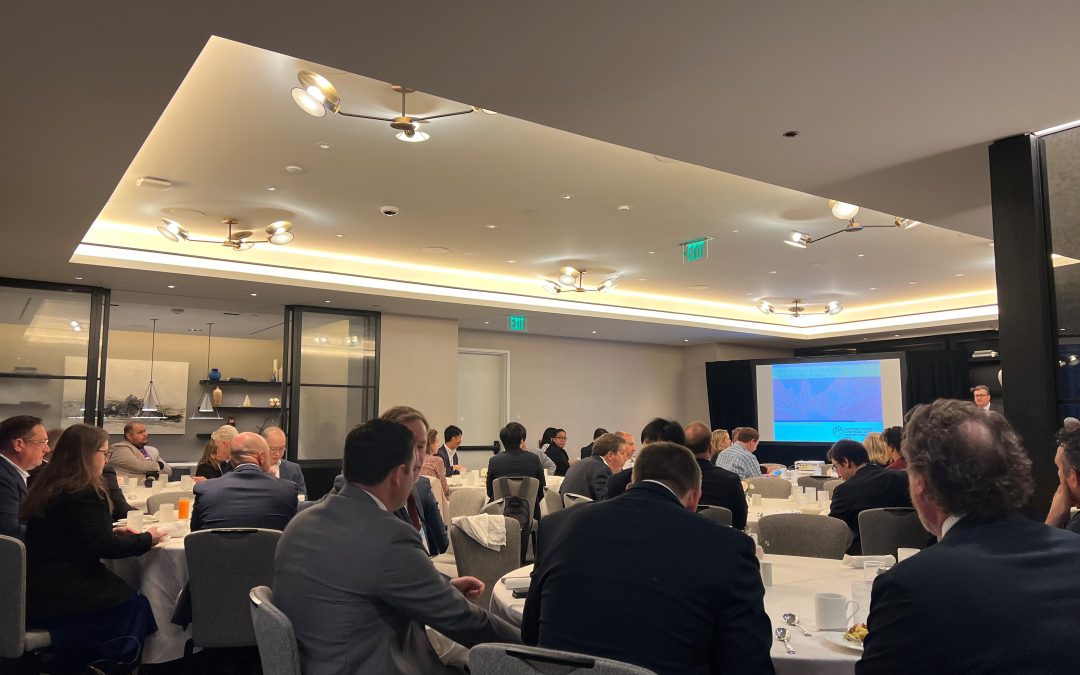
HOUSTON — The Western States and Tribal Nations (WSTN) Energy Initiative, a trans-national organization led by state and sovereign tribal governments to drive rural and tribal economic development and lower global emissions, co-hosted with Sempra Infrastructure Partners a standing-room breakfast forum during CERAWeek on the future of Rockies natural gas and Asian LNG markets.
More than 80 attendees joined the discussion, including representatives from the Ministry of Foreign Affairs of the Republic of Korea, the Asia Natural Gas and Energy Association, the Japanese Institute of Energy Economics, Sumitomo, Pacific Summit Energy, Mitsui & Co., and ITOCHU Corporation.
The forum came as conflict in Iran has disrupted global energy markets and renewed urgent questions about supply chain resilience. With roughly 80% of LNG bound for Asia transiting the Strait of Hormuz, according to the U.S. Energy Information Administration.
Rocky Mountain natural gas exported via Pacific-facing terminals offers Asian buyers a supply chain entirely free of that exposure. WSTN’s Rocky Mountain Gas Roadmap & Implementation Playbook identifies the infrastructure routes to make that supply a reality.
“What we are seeing in the Middle East is not a surprise — it is a recurring pattern, and Asian buyers signing long-term LNG contracts know it,” WSTN President Andrew Browning said. “We have the reserves, the environmental credentials, and a clear infrastructure roadmap. The interest is there — now it is time to move from conversation to contracts.”
Panelists included Martin Hupka, President, LNG, Sempra Infrastructure; Damon Daniels, Executive Vice President & Chief Commercial Officer, Tallgrass Energy; Annacita Crow, Jicarilla Apache Nation Legislative Council; and Shane Seibel, Executive Director, Southern Ute Growth Fund.
Last week, ahead of CERAWeek, WSTN Chairman Jason Sandel joined New Mexico Gov. Michelle Lujan Grisham on a trip to Washington for a roundtable with American Petroleum Institute President and CEO Mike Sommers and other national energy leaders to discuss balancing American energy security, responsible oil and gas production, and continued emissions reductions. Rockies gas was a part of that discussion.
“The gas is here, it’s clean, and we are ready to do business,” WSTN Chairman Jason Sandel said. “Western governors understand that you have to work together to produce results for your people — that’s the spirit behind Utah Gov. Spencer Cox’s Disagree Better initiative, and it’s the spirit that built WSTN. Rockies gas is an insurance policy for global energy trade: the redundancy and diversification that buyers need when primary supply routes are uncertain.”
A 2021 lifecycle emissions study commissioned by WSTN found that Rockies-sourced LNG would reduce net lifecycle emissions by 42%-55% compared to the higher-emitting fuels it would replace in Asia.
###
About the Western States and Tribal Nations Energy Initiative Western States and Tribal Nations is a unique, trans-national initiative led by state, county and sovereign tribal nation governments, focused on creating rural economic development, advancing tribal self-determination and reducing global emissions by exporting western North American natural gas to international markets that need lower-emitting fuels.
Contact:
Bryson Hull
P: 202-657-2855